![[LOGO]-Ulixe_Nova-positive](https://www.ulixenova.com/wp-content/uploads/2025/01/LOGO-Ulixe_Nova-positivo.png#25)

10/07/2024
Digital Twin: how it is revolutionizing the aerospace industry
13/03/2023
Learn how the Digital Twin revolutionizes the aerospace industry with advanced simulations and virtual models.
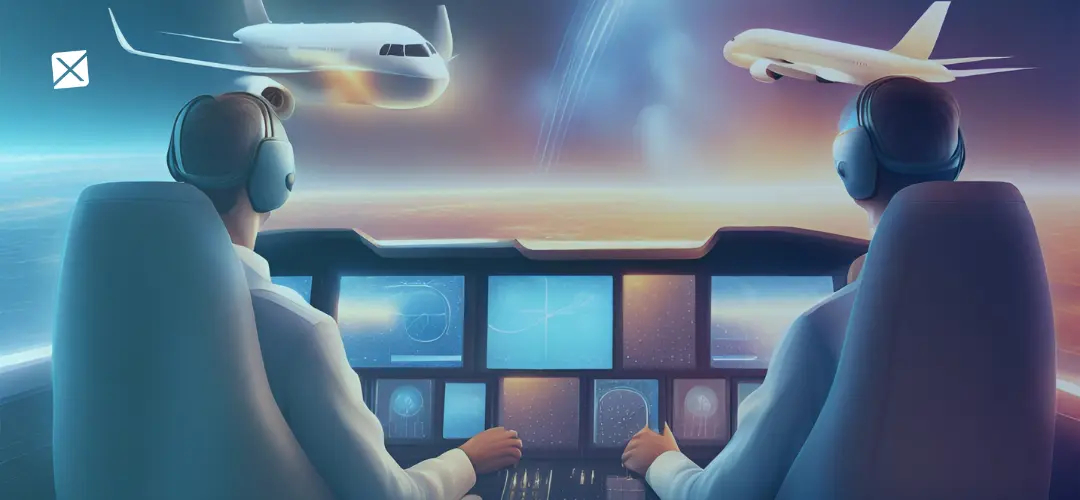
he aerospace sector is a world of people who, while remaining down-to-earth. Whereas, the IT sector is a universe populated by people who push the envelope of the real and turn imagination into the concrete and the concrete into the virtual.
Way back in 2011, NASA, the aerospace agency by definition, decided that these two worlds should marry, and from these came digital twins.
Index
- The concept of the Digital Twin in the aerospace industry.
- Digital Twin: an ally for spacecraft development
- The Italian context: where do we stand?
- Conclusions
The concept of the Digital Twin in the aerospace industry.
The earliest historical definition of the virtual twin in aerospace is a multi-physics, multi-scale, integrated probabilistic simulation of a vehicle or system. Simulation that uses the best available physical models, sensor updates, fleet history, etc., to mirror the life of its flying twin.
If it is not entirely clear, you can read my previous article in which I briefly recount the history of the Digital Twins.
How does the digital twin work?
The Digital Twin is an actual digital copy of a physical object. Various 3D graphic representation software can be exploited to model it. Then, by taking advantage of various computational models, different physical scenarios in which the real aircraft operates can be simulated.
Essential, then, is to acquire data from the physical world, perhaps even in real time, taking advantage of the various sensors on the aircraft.
All this offers the possibility of predicting future performance and improving the operation of the physical counterpart as the digital twin continually adapts to multiple operational situations.
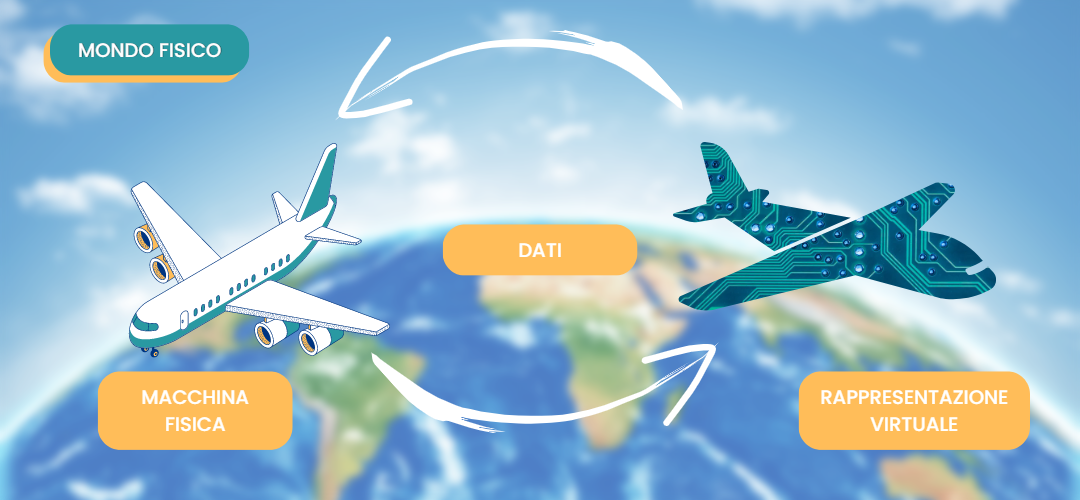
The elements of the Digital Twin
The importance of digital twin technology for Aerospace
The astonishing progress of digital technologies, the increase in computational and interconnection capabilities, of the last few decades is unparalleled; also to be considered is how greatly the understanding of physical phenomena and the ability to automate their numerical modeling has increased.
Despite these advances, tools for designing, operating, and maintaining aircraft (or entire fleets) have remained obsolete. The reason? Software and models have failed to progress and evolve at the same speed as hardware thus remaining inaccurate and out of date.
The Digital Twin is intended to meet the aerospace industry's need for a modern and reliable model that can faithfully reproduce aircraft in their entirety and follow them over their service life.
Digital Twin: an ally for spacecraft development
The tuning of simulation software leads to optimized performance and thus higher performance. In fact, calibration of simulation programs allows the digital twin to emulate activities much faster than events occur in the real world. Therefore, the use of virtual duplicate, not only during design but also during all operational phases of the aircraft - in real time - is a real prospect.
Decision-making capabilities for various statistical and engineering analyses are enhanced. What is more, in its original sense, the Digital Twin is found to be a valuable tool to aid in predicting failures during operational life based on what is received on the ground via sensors installed on the aircraft.
Earth and Spacecraft. Elements of this image are from NASA.
Theopportunity to take advantage of computer simulations rather than scaled physical models and invasive and/or destructive testing--moreover, in environmental conditions that are difficult to replicate on the ground--is the main reason why the space industry is going for what the Digital Twin offers.
In a software simulation, the physical operating conditions of a spacecraft can be reproduced on a one-to-one scale without resorting to complicated-sometimes impossible-conversions. This is without spending large sums of money on very expensive prototypes.
Flight simulation--on the ground
Modern aircraft , including space craft , constantly collect and process a large amount of information, acquired and processed by various on-board systems, making them perfect for collecting the data needed to feed a numerical model.
Once this data iscommunicated to one's digital duplicate, the latter can be updated and be made to "fly" into virtually any kind of context it might encounter in the future.
Simulation allows a perfect "mirror" of the physical counterpart from which to derive useful data for preventing failures and scheduling timely maintenance.
The Italian context: where do we stand?
Characterized by the seamless integration of "Cyber" and physical spaces, that of digital twins is one of the most promising technologies of the contemporary era that, more than others, succeeds in realizing the "smart" production that underlies the fourth industrial revolution, i.e., the one currently underway.
Numerous companies in the industry have adopted of Digital Twin; thanks to it we have seen improvements in product quality but also not inconsiderable savings in time and consumption.
Leonardo: designed by simulation
The advantages in using this model are confirmed by the Italian Leonardo: in an interview, Cavazzoni (Director of Leonardo's Hpc Laboratory) says that their design philosophy at Leonardo falls under the "design by simulation" typology, and this has allowed them to significantly cut down on development time and costs: thanks to the multiphysics, multicomponent and multiscale simulation, characteristic of the digital twin, they are able to create a considerable number of virtual prototypes and simulate numerous configurations in the most varied scenarios.
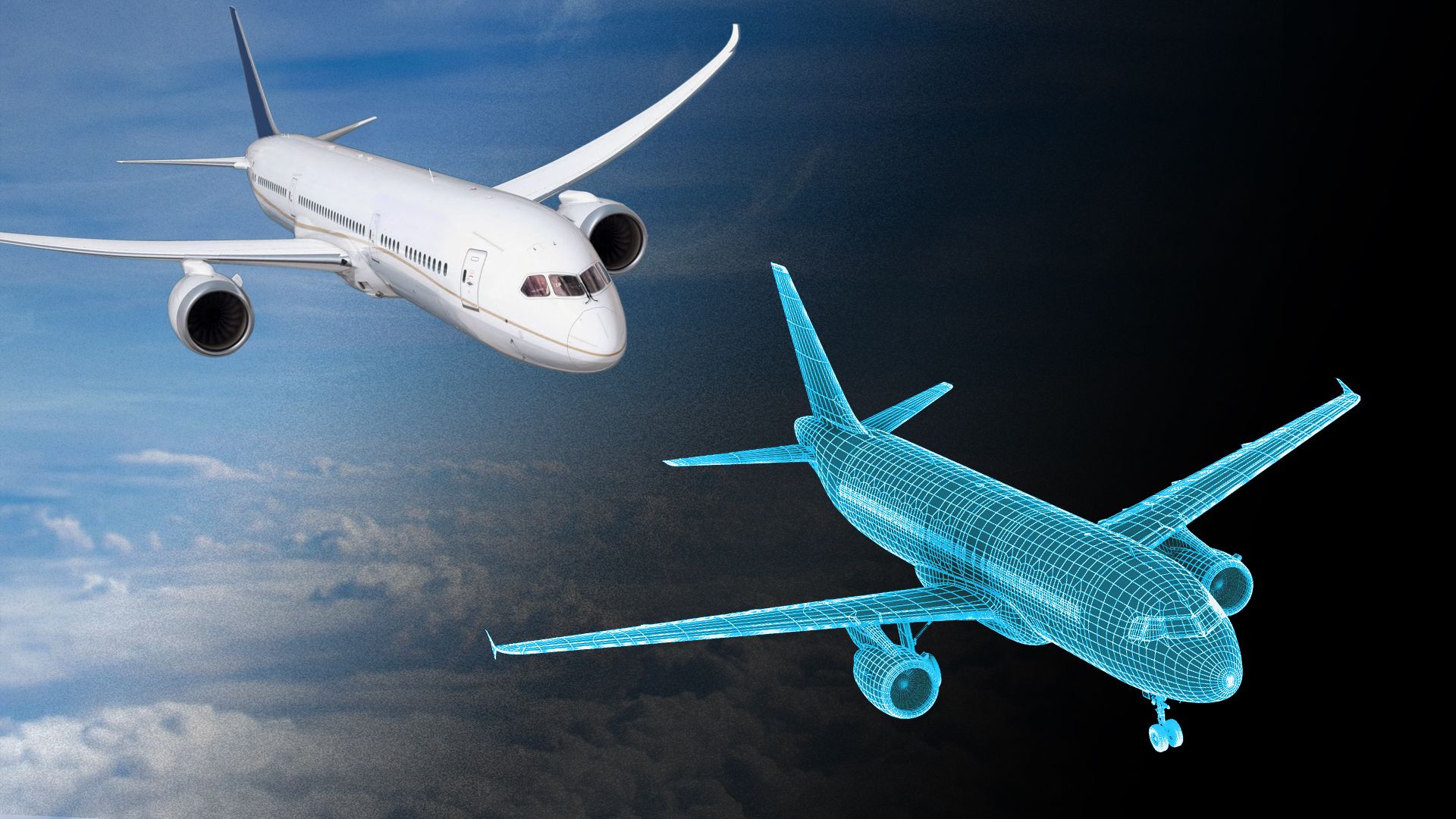
Source: Carlo Cavazzoni - Leonardo
In numerical terms, the company claims that it has already managed to save up to 80 percent of time with a 25 percent reduction in consumption, despite the fact that getting to mass adoption of these tools will take several years, due to the inevitable need to reorganize design and industrial processes and therefore acquire new skills.
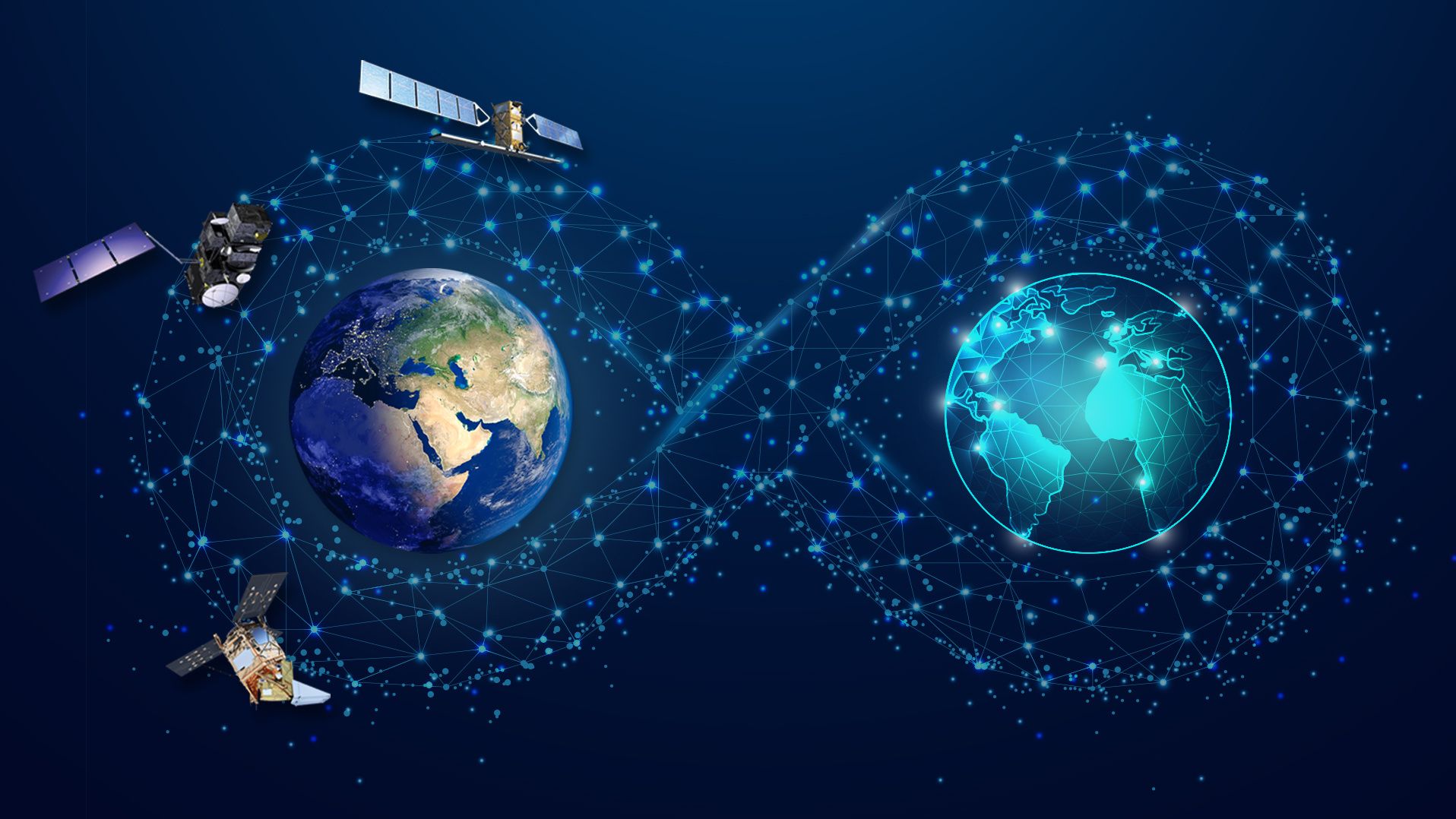
Digital twin generation Earth
Source: ESA
Leonardo's space division also participated in an ESA project to develop a digital model of the Earth with very high accuracy: the Digital Twin Earth Precursor (DTEP). Through it, the aim is to increase understanding of thelocal impact of climate change to thus make predictions and expand decision-making capabilities.
ASI - Italian Space Agency: the DIGES project.
With the "DIGital twin of Lunar Exploration Systems" (DIGES) project, ASI has proposed a preliminary study of a Digital Twin architecture for a "rover" vehicle; thus, faster design and greater reliability of future space exploration missionsand vehicles are expected.
Conclusions
Although the integration of simulation and Digital Twin is still evolving in the industrial process and overall lifecycle, it is undeniable that the Virtual Twin has already taken an active role on a global scale, with particular prominence in the aerospace industry.
The ultimate goal of creating a Digital Twin that is an accurate virtual replica of each aircraft, including every one of its components and systems/equipment, on which realistic simulations of various stresses can be performed is increasingly within the reach of industry
Despite the ongoing evolution, the future of Digital Twin in the aerospace industry looks bright. As this technology continues to mature, the aerospace industry will benefit from smarter design, optimized performance, and advanced predictive maintenance.
Through continued collaboration among industries, institutions and research organizations, the Digital Twin is already proving to be a driving force in the evolution of the aerospace industry toward a more efficient and effective future.