![[LOGO]-Ulixe_Nova-positive](https://www.ulixenova.com/wp-content/uploads/2025/01/LOGO-Ulixe_Nova-positivo.png#25)


10/07/2024
Digital Transformation: From Digitization to Innovative Leadership
24/11/2023
Learn how digital transformation is redefining the way companies operate. The article delves into central aspects of digital transformation, such as the importance of corporate culture, integration of existing technologies, review of KPIs, and the need for informed leadership.

Index
- What is digital transformation? A new paradigm for companies
- Digital transformation highlights.
- How Digital Has Revolutionized the Business Model.
- Digital transformation: a choice to ponder
What is digital transformation? A new paradigm for companies
Digital transformation is defined as the'integration of technologies into business operations.
These integrations help the company to grow and respond to ongoing market developments, as well as to improve the services offered to customers.
Digital transformation is not only about the integration of digital technologies and solutions in various areas, but it is also about a change at the cultural level, a new view of business and end-consumer needs, a look at new technologies and innovation.
Simply put, digital transformation occurs when organizations integrate and renew the technologies they use and their mindset.

Digital transformation: the factors driving it
In recent years, the business landscape has undergone a momentous transformation, catapulting even the smallest neighborhood store into the vast cyberspace.
This change in the scenario has been facilitated by continued advances in digital technology, such as the advent of the Internet of Things (IoT) and Artificial Intelligence (AI). In addition, the increasing dynamism of the market has prompted companies to veer decisively into the digital age.
A further push for digital transformation was triggered to followed by the pandemic of Covid19which forced many employees into telecommuting or smart-working in the early 2020s. The inability to travel to the office, communicate in person or work in a traditional way has forced companies to revise their work methods and processes.
This paradigm shift has fueled the chain of actions that are revolutionizing the way information is managed: from production to fruition.

Initially, companies provided digitization of documents, thanks to valiant workers who with dedication and precision explored archives, converting documents into their digital format.
Next came digitization, a more advanced process in which data are carefully processed and integrated into new business systems.
Finally, digital transformation has marked a sea change in companies' overall approach to using digital technologies, redefining processes and strategies to adapt to the evolving digital landscape .
Digitization, digitization, digital transformation: how to get your bearings
In the previous paragraph, I used two words that, at first glance, may seem identical: digitization and digitization . However, it is essential to understand the distinctions between them.
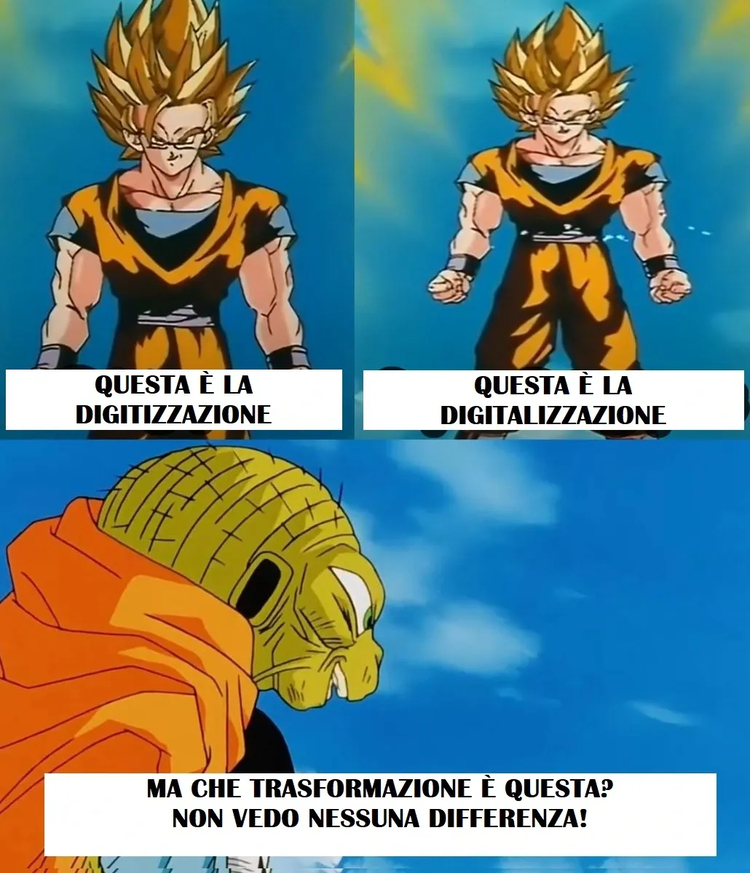
Digitization refers to the process of transforming a resource from analog to digital while keeping the process unchanged. A concrete example is the scanning of a document, which transforms a sheet of paper into a PDF. Digitization, on the contrary, intervenes in the process: data received, are processed and processed through digital technologies, such as of the completion of banking documents directly online. People no longer go through paper but through digital information systems.
Digital transformation highlights
First, let's start with the evolution of business processes. In a world that is increasingly digitized, keeping up with the times and new technologies is almost a must, especially if you want to grow your business.
Lack of awareness about technology often leads to fearful consideration of smart technologies such as AI, IoT or robotics. When, in fact, these are already an integral part of our lives and, in many cases, the can simplify them like modern IDEs , which alone find and fix compilation errors.
Leveraging this knowledge can increase productivity, safety at work, and perhaps reduce working hours in the future.
Think about how much faster it is to send an e-mail than to write a letter and then mail it, to perform complex calculations by taking advantage of an Excel spreadsheet, or for truck drivers how much safer the fatigue detector makes the journey.
And how many PCs have already been rescued by ChatGPT with simple requests such as "Please tell me where I messed up the code before I find out if the computer can survive a two-story fall!"?
Find out, as the invention of the Digital Twin is revolutionizing the aerospace industry, the state of advancement of the Super Computers (HPC) or how the Geo Data have transformed the way we enjoy art and land. Read my colleagues' articles and be inspired!
Okay, knowledge is power technology is useful, but ...
How can digital transformation grow your business?
The use of these technologies can and should drastically change the method of work by following three main requirements: simplify, speed up, and eliminate repetitiveness.
- Simplify: eliminate difficulties in performing one or more tasks. New technologies, when properly integrated, can simplify complex processes, making operations more intuitive and efficient.
- Speed up: that is, reduce production time. Digital solutions enable tasks to be performed more quickly, optimizing workflows and improving timeliness in business operations.
- Eliminate repetitiveness: many actions are performed over and over again in an almost identical manner. Finding appropriate automations to handle such tasks not only reduces stress but also prevents human error, ensuring greater accuracy.
How Digital Has Revolutionized the Business Model.
So, it's all in the hands of the ICT department?
Fortunately, no! Involving only the ICT department would not be enough, as digital transformation is a comprehensive business initiative that goes beyond mere technology implementation.
In fact, the technical aspect is directly related to the business aspect. Thus, another salient point is related to the transformation of the business model.
The effective integration of technology into the business model is critical to the sustainability of any business in the digital age.
Therefore, once the KPIs (key performance indicator) are taken into analysis, the old business model must be readjusted to a new, more technology-oriented one.
KPIs for measuring the success of digital transformation
Consideration of KPIs provides clear guidance on what aspects need to be optimized and monitored to ensure successful transformation to digital business.
Let's look together at some factors to take into analysis that, in my experience, are often common to multiple realities and the questions you need to ask yourself before you start:
- Technology: Is the technology to date in our possession a valuable aid to the business? Is it being used to meet both business and end-user needs? Is this level of technology also valid for future projects and new business models that want to be undertaken?
- Data Analysis.: can the ability to store more data and analyze it quickly help the company? (the answer is "yes") How can I go about creating a predictive framework and organizing user profiling?
- IT infrastructure.: Are the old system logics valid for future projects? Can the existing structure withstand the expected technological change?
- Cost/Price Management.: the new business model will have different costs, so the product or service sold may also be changed in order to recoup the expense, perhaps by targeting subscriptions.
- Viewing as a whole: figures involved in various processes will have to make calculations by looking ahead in time and analyzing new areas.
- Corporate structure: Does itmake sense to continue to maintain an old business structure when everything else is changing? In the case of using a waterfall working method, might it be worthwhile to switch to an agile one?
The last point, perhaps the most difficult to conceive, especially for dated realities, is the change of mindset, the Organizational and Cultural Transformation.
"It has always been done this way" should be replaced by "It could be done this way."
Evidence-Based Management: how to measure value and drive innovation
Linking to the points previously discussed, once the KPIs are analyzed, the organization can move toward continuous value creation.
One framework that organizations can use to measure, manage and increase the value of their business is the one developed by Ken Schwaber and Scrum.org: Evidence-Based Management (EBM).
EBM assesses 4 crucial areas of value, with specific measures tailored to the needs of each organization. The measurement and monitoring of these 4 areas collectively contribute to anagile organization 's ability to generate business value.
- Current value (CV): what is the current, starting value?
- Unrealized Value (UV): what is the value that can be achieved?
- Time-to-Market (T2M): how long is time required to deliver new value?
- Ability to Innovate (A2I): how are you taking action to innovate the situation?
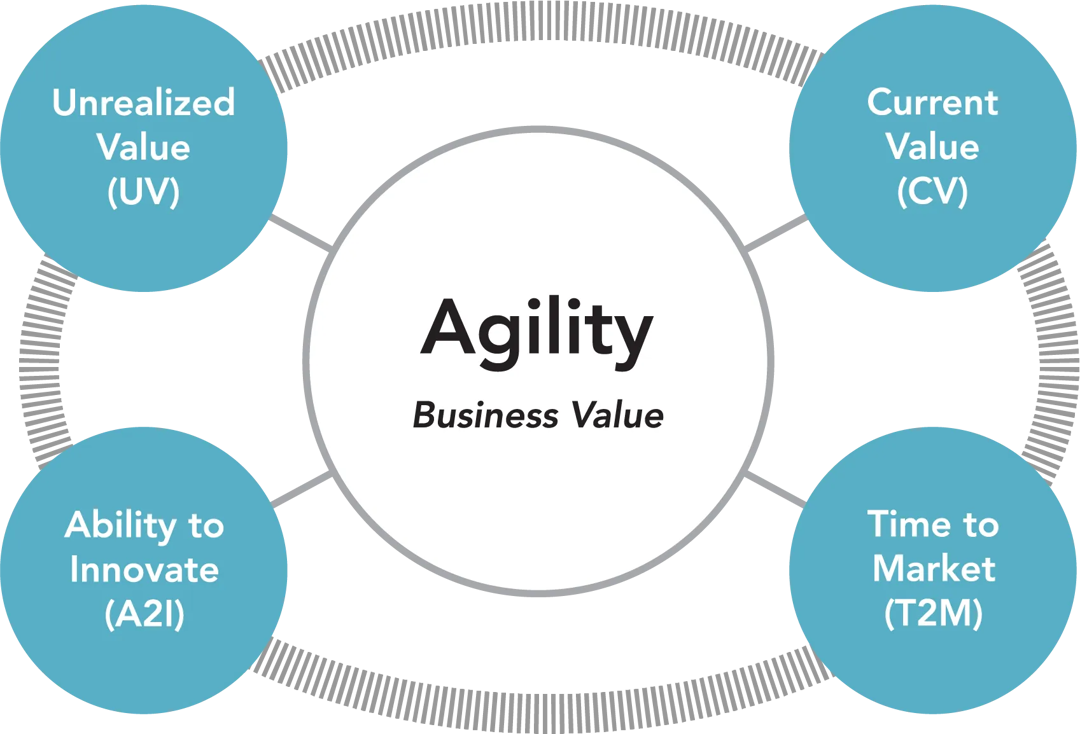
Evidence-Based Management (EBM) Framework.
Source: Scrum.org
To explore the topic further, consult the resources made available by the authors of the framework.
Road Map for Digital Transformation
Thimble transformation is not something you decide at the bar, one of those things like "Oh, boy I had a brilliant idea!" and-spoiler allert-itis never brilliant. Instead, it is a process that must be organized from start to finish, leaving nothing to chance.
- First of all, one must have a clear and decisive strategy at all levels of the enterprise. Dropping decisions and sudden changes from above can create upheaval in operational parts and workers who have a standard, repetitive method of work.
- Having a clear starting point and knowing where you want to go. Knowing concretely the reality in which you are working allows you to be able to make accurate decisions for the future and give yourself true timelines, not doing things by feeling.
- Creating a roadmap You need to know what is a priority and what is not. Probably the best way is to make a long-term plan and divide it into small steps, while also taking into account that some things may not go well on the first try or may be changed over time. This roadmap should not be the absolute bible; it should dictate times, costs, and activities to be done truthfully, but not precisely. Digital transformation is not an exact science.Empowering management figures. Empowering management figures, as well as redistributing the burden of work gives greater confidence to the various business "plans."
- Analyze and monitor. By analyzing the data in real time, one truly becomes aware of the progress of the digital transformation and how one should, or should not, adjust the course on the planned roadmap. Various tools, such as Dynatrace, can be used to better analyze progress.
Innovative leadership: the key to digital transformation
Revising KPIs in a "digital" key implies the need to acquire new digital skills. This can result in two approaches: investing in people training or making the most of the skills already acquired. In this context, the need emerges for leadership capable of better evaluating operational resources.
Let's take a step back. What is leadership? Let's look at the magazine's definition Leadership & Management:
Leadership is the set of individuals who lead an organization. It is the activity or ability to lead a group of people or an organization, inspiring employees to engage in the achievement of common goals.
The purpose of this leadership is to make the most of technological innovation to define and manage future projects.
Leadership should be the first to grasp the vision of the digital change taking place, both in the broader context and within the enterprise, and must be able to discern when it is necessary to rely on outside experts, such as Ulixe Group.Contact us for specialized consulting at no cost!
This change of mindset is essential to meet the challenges of the ongoing digital transformation.
Digital transformation: a choice to ponder
In conclusion, digital transformation brings with it a number of significant benefits, including:
- An improvement in business efficiency
- A more robust, performant and enjoyable user experience
- Significant savings in resources
- The increase in profits
- Better competition with other businesses in one's industry.
Okay, but + true that all that glitters is not gold, with great pros also come great cons (maybe that wasn't the phrase but we get the picture).
First of all, digital transformation requires significant financial and energy investment. Small local businesses may not benefit from the renovation, especially if their local business model is already effective.
In addition, completely renovating a business involves risk, with no immediate guarantee of return on investment. This is especially relevant for smaller companies. Finally, there is a risk of focusing excessively on capital at the expense of employee welfare, generating stress and tension.
Therefore, while digital transformation offers significant opportunities, it is essential to carefully assess the long-term costs, risks and benefits before committing to this process.