![[LOGO]-Ulixe_Nova-positive](https://www.ulixenova.com/wp-content/uploads/2025/01/LOGO-Ulixe_Nova-positivo.png#25)


10/07/2024
Guide to Automated API Testing: Optimizing Your Development Process
23/02/2024
Learn how to improve your development process with our comprehensive guide to automated API testing. Continue reading Stephen's article!

Want to understand how to improve the API testing process? Let's find out together!
In this article we will explore the world of test automation, focusing on essential strategies for implementing and refining automated API testing. When developing an application, it is imperative not only to write the guidelines that govern it but also to ensure that it works as intended in every possible scenario. This is how API testing comes into play as a valuable ally, watching over every call making sure that they are defect-free and conform to expectations.
Index
- Planning Automated Testing of APIs 1 Defining Objectives 2 Identifying how to test APIs 3 Automating tests to be stress-free
- Selection of API Testing Tools 1 Postman, the tool of choice for testers 2 SoapUI, the tool with the most advanced features
- Creation of Test Cases
4. Monitoring and Reporting of Results
1 Continuous Improvement of the Testing Process
5. Integration with Other Tools and Processes
6. Toward an Efficient and (Almost) Bugs-Free Future.
Scheduling Automated Testing of APIs
Goal setting
Before starting with automated API testing, it is important to have a clear plan. This means knowing what stage of development we are in-knowing what you want to test, choosing which parts of the software to check, and deciding which tests are the most important to do to make sure everything is working at its best. For detailed guidance on the architecture definition phase, I recommend you read our article, "At the Heart of the Code: Clean Architecture vs. Layered Architecture."
Identification of API testing methods
API testing can be done mainly in two ways: in the initial phase of developments, testing will be mainly manual. Once the application code is stable, one can then move to automation of API calls and thus have a solid foundation for all future testing and changes. The use of different Tools, both in the manual and automated phases, greatly speeds up the testing process.
Automate testing to be stress-free
In addition, it is useful to make sure that the automated tests start autonomously each time the software undergoes a change, so that everything is under control each time the application is updated.
Selection of API Testing Tools
Choosing the right tools is critical to ensure that API testing is effective, especially in the early stages of application development. At this stage we rely on several Automated Testing Tools, such as Postman and SoapUI. Let's go and discover them together!
Postman, the tool of choice for testers
Among the most widely used tools for API testing are Postman.
Postman is particularly appreciated for its intuitive interface, which allows creating and managing tests even without advanced programming knowledge, ideal for testing RESTful APIs and SOAP.
This makes it the tool of choice for testers and developers, as it facilitates the submission of requests to APIs and the analysis of responses-all well organized into collections, making them easy to organize and reuse. To learn more about Postman, you can check out this link.
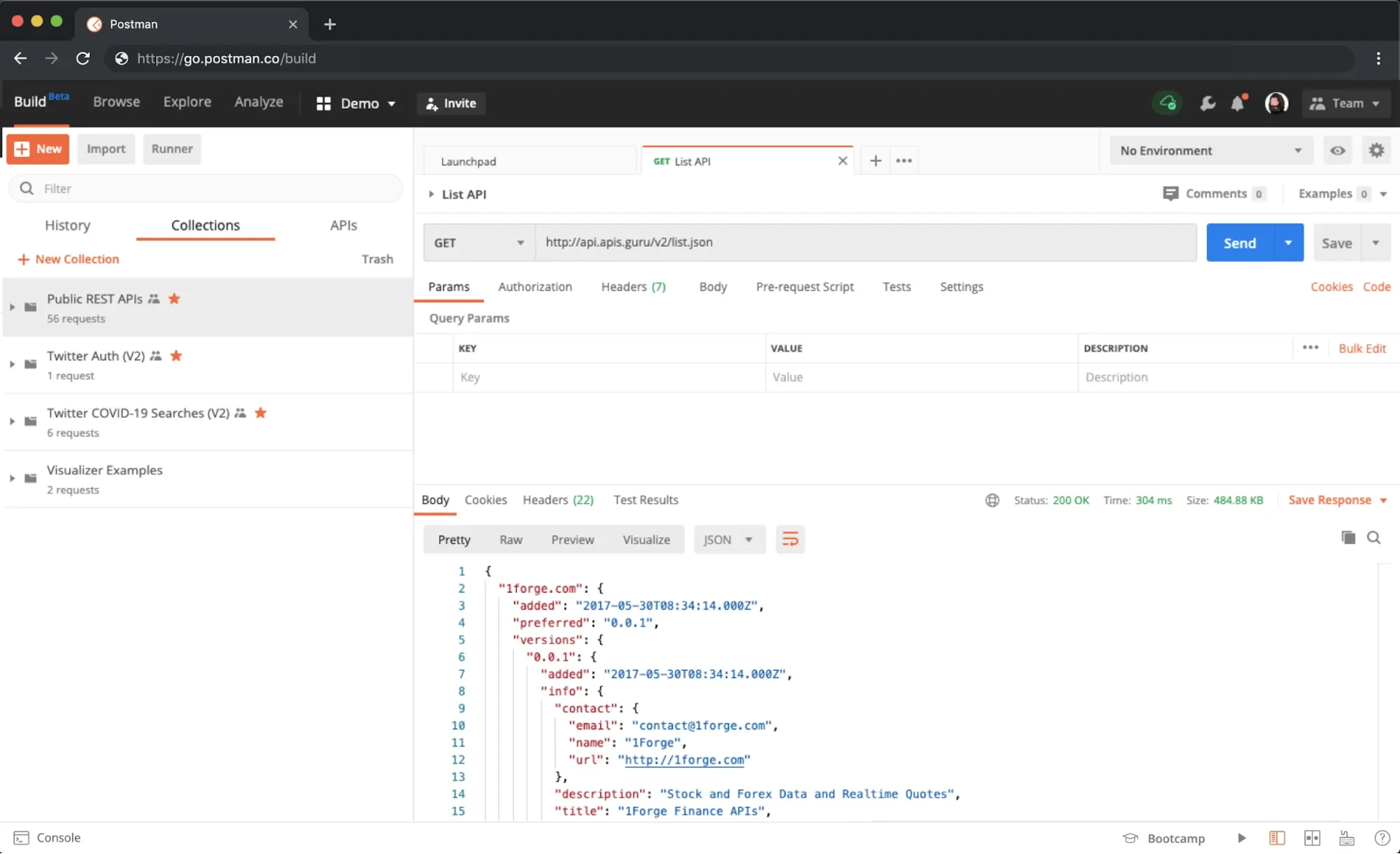
Postman interface Source: postman.com
SoapUI, the most feature-rich advanced tool
Another popular tool in the world of API testing is SoapUI, ideal software for testing SOAP and RESTful APIs, which offers advanced features such as:
- safety tests
- load test
- compliance testing
Very useful for handling more complex test scenarios and repetitive tasks. You can find documentation related to SoapUI here.
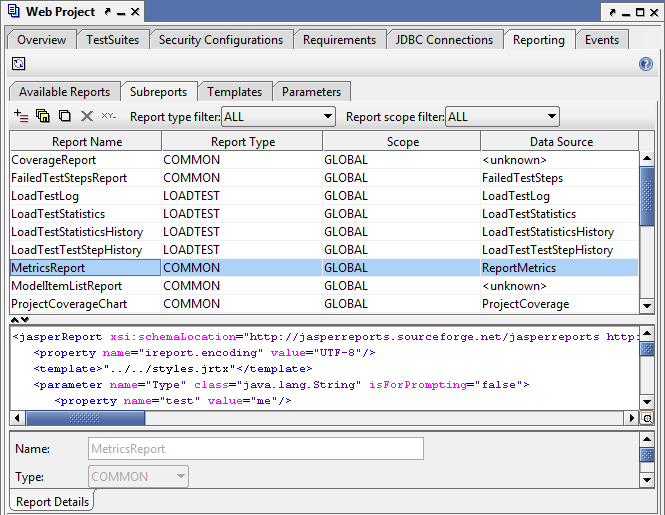
SoapUI Source: SoapUI.com
Creation of Test Cases
In addition to the use of the tools, which greatly facilitate the work of testing by testers, it is of paramount importance to create test cases, which serve as a guide for all practitioners.
These should be designed to cover all aspects of the functionality of the APIs under consideration, including functionality, security, performance, and compatibility checks.
It is important to create test cases that simulate real use scenarios, including positive tests to verify that the API is behaving as expected, and negative tests to handle errors and edge cases.
Test Data Management
For automated testing, it is essential to have effective management of test data, which can include input data, configurations and response expectations. Using dynamic and parameterized test data can help make testing more robust and flexible.
Monitoring and Reporting Results
Continuous monitoring of test results and generation of detailed reports are critical to assessing the effectiveness of the test automation process. Reporting tools and plugins can help visualize test results, identify trends, and facilitate problem diagnosis.
Continuous Improvement of the Testing Process
Test automation is not a one-time process; it requires continuous improvement. Regularly analyzing test results, updating test cases according to new requirements, and optimizing test workflows can help maintain the effectiveness of the test automation process over time without having to rewrite everything from scratch each time, thus avoiding annoying and time-consuming rework.
Integration with Other Tools and Processes
Integrating automated testing with other tools such as, for example, bug management systems like Jira, can provide a broader view of software quality and speed up troubleshooting. I recommend you take a look at the documentation from Atlassian, the company that created the Jira bug tracker.
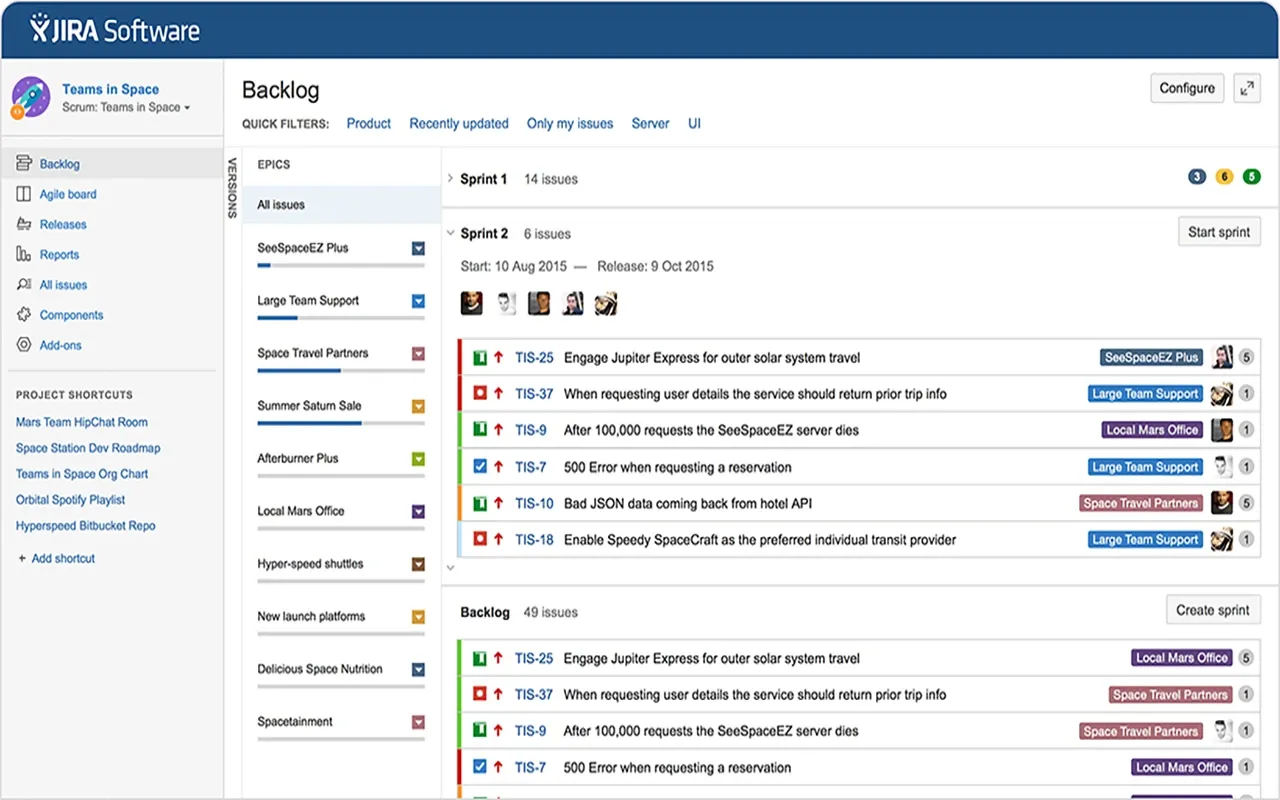
Jira Interface Source: Jira.com
Toward an Efficient and (Almost) Bugs-Free Future
Adopting a systematic and well-planned approach of API test automation can significantly improve the efficiency of software development, reducing release time and increasing the quality of the final product.
While tools and technologies play a crucial role, the key to success lies in the ability to integrate test automation into an optimized strategy by ensuring that every aspect of the API is thoroughly tested and validated.
But now it's your turn: are you ready to optimize your development process with automated API testing? Share your experiences or questions in the comments below, and don't forget to elaborate further on this fundamental topic for (almost) bug-free software.